If you’ve noticed crusty buildup on your faucets, soap that won’t rinse clean or appliances that need replacing sooner than expected, you’re likely dealing with hard water. This common issue occurs when high levels of calcium and magnesium dissolve into your water supply and leave stubborn deposits throughout your plumbing system. It can reduce appliance efficiency and lead to costly repairs.
Understanding hard water is the first step toward permanently solving it. This guide will help you recognize the warning signs, understand the financial and health impacts, and explore effective water treatment solutions that protect your home and family.
Telltale Signs of Hard Water
Most homeowners can identify common signs of hard water by observing everyday household issues. If several of these symptoms sound familiar, your water may contain elevated mineral levels.
- Soap scum in tubs and showers: That stubborn film clinging to your shower walls isn’t just dirt—it’s a chemical reaction between soap and minerals in your water.
- Spots on your dishes and glassware: Hard water leaves behind white, chalky spots and streaks on dishes even after they’ve been through the dishwasher, making clean glassware look perpetually dirty.
- Dry skin and hair: Mineral deposits prevent soap from rinsing completely, so they leave a film on your skin that causes irritation and dryness while making hair feel rough and lifeless.
- Stiff, scratchy or faded laundry: Clothes washed in hard water feel rough to the touch, fade faster and wear out more quickly because mineral deposits get trapped in fabric fibers.
- Reduced water pressure from clogged pipes: Limescale builds up inside pipes, narrowing the water passage and gradually reducing pressure throughout your home.
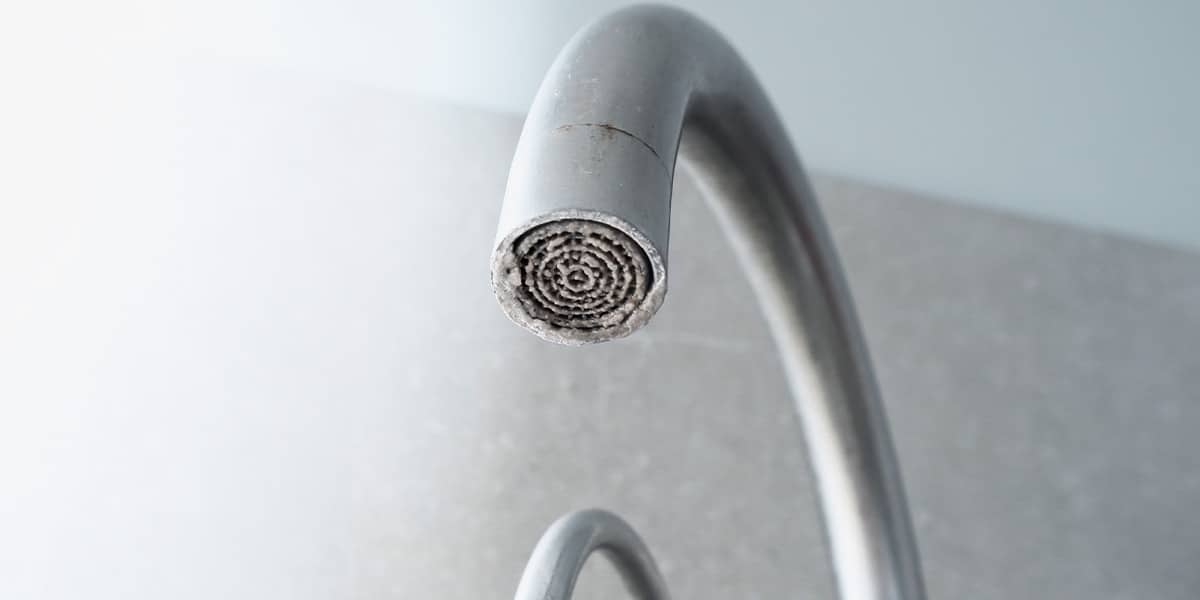
- Limescale buildup on fixtures: Those crusty white or greenish deposits around faucets, showerheads and appliances are visible hard water symptoms that signal mineral accumulation throughout your plumbing.
- Failing appliances and frequent repairs: Water heaters, dishwashers and washing machines exposed to hard water break down sooner and need more frequent servicing than those using treated water.
The Hidden Costs and Health Impacts of Hard Water
The visible annoyances of hard water represent only a fraction of its true impact. Beneath the surface, mineral deposits can damage your home’s most expensive systems, increase energy consumption and potentially affect your family’s health.
How Hard Water Damages Your Appliances
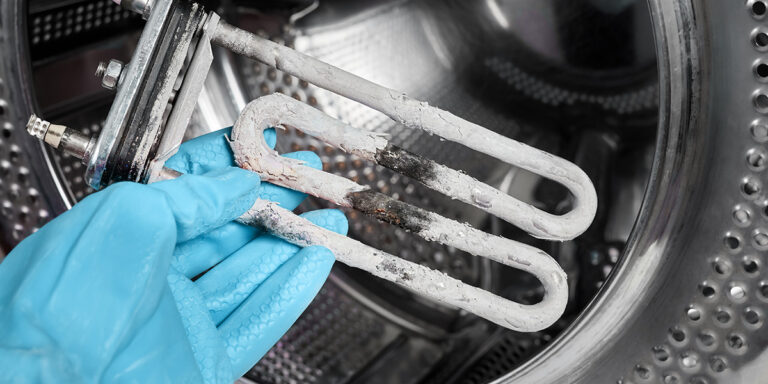
Limescale accumulation acts as an insulating barrier inside water-heating appliances. When calcium and magnesium minerals heat up, they crystallize and attach to heating elements, tank walls and internal components. This mineral layer forces your appliances to work significantly harder, reducing their efficiency.
These mineral deposits also corrode internal components. Valves stick, heating elements burn out prematurely and mechanical parts wear down faster. Frequent breakdowns, expensive repairs and appliances that need replacement years before their expected lifespan are the result.
Increased Energy Consumption and Higher Utility Bills
Hard water’s impact on your utility bills is both measurable and substantial. Research supported by the Water Quality Association demonstrates that gas water heaters can lose up to 24% of their efficiency due to scale buildup. That efficiency loss translates directly into higher monthly energy costs, as your appliances consume more gas or electricity to deliver the same amount of hot water.
Appliances running inefficiently require more frequent maintenance, and premature replacement of major systems like water heaters represents a significant unplanned expense that proper water treatment could prevent.
Health Concerns
While hard water isn’t considered dangerous to drink, its effects on skin and hair can be uncomfortable and medically significant for some individuals. Mineral residue prevents soap and shampoo from rinsing away completely, leaving a thin film that can dry out skin, clog pores and trigger irritation.
For people with sensitive skin, the consequences can be more serious. Scientific research has established a connection between hard water exposure and increased eczema risk, particularly in children and individuals already prone to skin conditions.
Hair suffers similar effects. Mineral buildup makes hair feel dull and brittle. Hard water’s impact on hair can lead to increased breakage and the need for more intensive conditioning treatments.
Diagnosing Hard Water in Your Home
Once you’ve recognized the symptoms, confirming the presence of hard water and understanding its severity helps you choose the right solution. Several methods exist for testing water hardness, ranging from simple at-home approaches to comprehensive professional analysis.
Using Water Hardness Test Strips
Test strips available at hardware stores provide a more precise measurement. These strips change color when dipped in water, and you compare the result against a chart that indicates hardness levels. This method gives you a numerical value that helps determine which treatment approach makes sense.
Contacting a Professional for a Water Quality Analysis
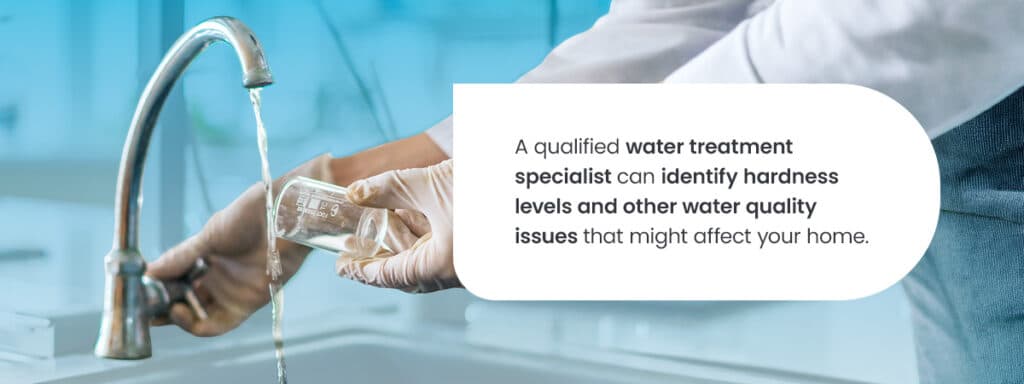
Professional testing delivers the most comprehensive and reliable results. A qualified water treatment specialist can identify hardness levels and other water quality issues that might affect your home. This thorough analysis ensures you choose a solution tailored specifically to your water’s unique characteristics.
Your Guide to Permanent Hard Water Solutions
Addressing hard water effectively requires more than temporary fixes. While temporary fixes like vinegar rinses or descaling products can address symptoms, water treatment systems provide a permanent solution to hard water that addresses the root cause.
Water Softeners
Traditional ion-exchange water softeners remain the most effective method for eliminating water hardness. These systems work by passing hard water through a tank filled with resin beads charged with sodium ions. As water flows through, calcium and magnesium minerals attach to the resin and sodium ions are released into the water.
Reverse Osmosis Systems
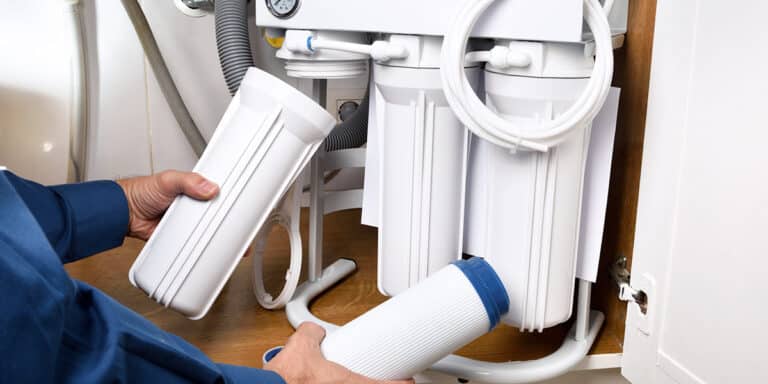
Reverse osmosis technology filters water through a semipermeable membrane that removes dissolved minerals along with other contaminants, like arsenic and PFAS. These systems excel at purifying drinking water and work well as point-of-use solutions for kitchen sinks. While they can reduce hardness in the water you consume, reverse osmosis systems are typically installed as point-of-use solutions — such as at a kitchen faucet or in the basement — but they can be located wherever is most convenient for your household.
Salt-Free Water Conditioners
Salt-free water conditioners take a different approach by changing the structure of hardness minerals rather than removing them. Through template-assisted crystallization, these systems alter the form of calcium and magnesium minerals, making them less likely to form scale deposits. These conditioners appeal to homeowners who want to avoid adding sodium to their water supply.
The Kinetico® Difference: Advanced Hard Water Solutions
Not all water softeners deliver the same performance, efficiency, or reliability. Kinetico® systems represent an advancement in water treatment technology, designed to provide superior results while minimizing operational costs.
- Twin-tank design for continuous soft water: While one tank regenerates, the other remains in service, ensuring your home never experiences a water softening interruption.
- Nonelectric operation: Water pressure powers the system, eliminating electrical connections, timers or computers that can fail. This mechanical simplicity delivers exceptional reliability and lower maintenance costs.
- Smart, usage-based regeneration: The system regenerates only when necessary based on actual water usage, reducing salt and water consumption compared to timer-based softeners.
For families seeking performance and value, choosing Kinetico® means investing in proven technology backed by decades of engineering refinement and a reputation for durability.
Start Solving Your Hard Water Problems With CGC Home Services
Hard water doesn’t have to be a permanent problem in your home. CGC Home Services has been protecting homeowners since 1946. We provide water softening services in Michigan, Florida and the Carolinas. As an authorized, independent Kinetico® dealer, we install advanced water treatment systems designed for efficiency and long-term peace of mind.
Ready to protect your home? Contact us today to schedule a free water quality analysis and get a customized recommendation for water softener installation or a comprehensive water treatment system for your home’s needs.