Managing a restaurant means keeping a close eye on costs, and when equipment expenses start climbing without a clear reason, it’s frustrating. You might notice increased service calls, coffee that tastes off or guest complaints about cloudy ice in their drinks.
These issues can feel unrelated, but they often share a common cause — water quality. Most restaurant water systems draw from municipal supplies that meet safety standards, but those standards don’t address how dissolved minerals and chlorine can affect kitchen equipment, beverage quality and the guest experience.
The Hidden Costs of Poor Water Quality in Commercial Kitchens
Poor water quality affects your operation in three distinct ways, each one creating cost or quality concerns that can be difficult to trace back to the water itself.
Food Taste and Beverage Consistency
Water is an ingredient in everything you serve, from coffee and fountain drinks to ice and prepared dishes. When that water contains dissolved minerals, chlorine or other untreated compounds, those elements show up in the final product. Coffee tastes bitter or flat. Fountain beverages lose their carbonation or develop off-flavors, and the ice looks cloudy instead of crystal-clear.
Even when your team follows recipes exactly, water quality impacts the outcome. The issue isn’t your ingredients or your process. It’s the water itself, and variations in water quality from day to day or season to season create inconsistency that guests notice. When the same dish tastes different across visits, it undermines the reliability guests expect from your operation.
Equipment Longevity
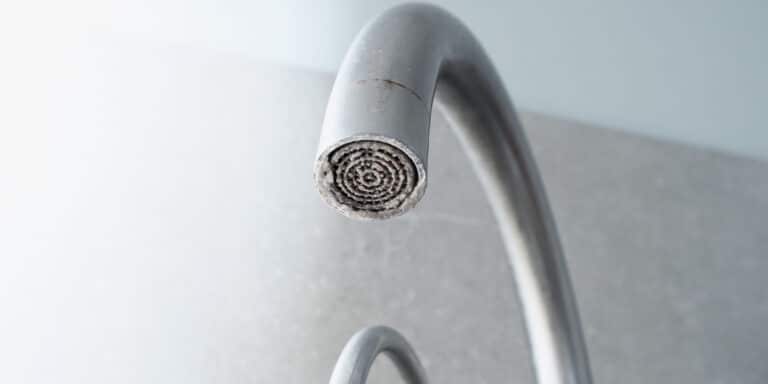
Hard water is common across much of the country. According to the U.S. Geological Survey, hard water is prevalent throughout the east-central and western United States, and it causes mineral buildup in plumbing, fixtures and any equipment that uses water. In commercial kitchens, that means dishwashers, ice machines, steamers, coffee equipment and water heaters.
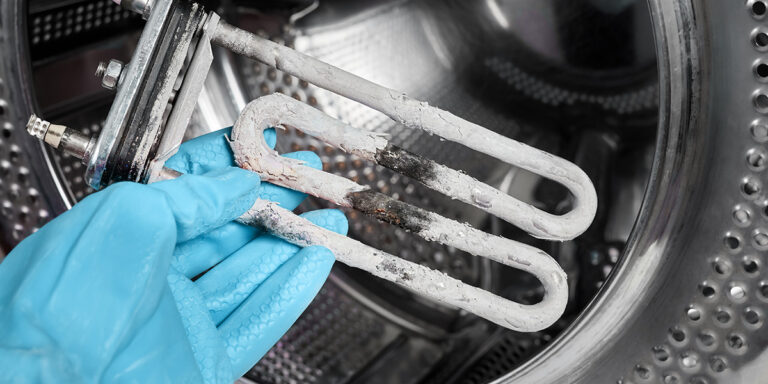
Scale deposits accumulate inside this equipment, forcing it to work harder to achieve the same results. Research from the Pacific Northwest National Laboratory shows that hard water scale can reduce efficiency for equipment like water heaters by up to 10% and shorten equipment lifetime by 25% to 40%. Even a small amount of scale on a heat exchanger increases fuel consumption significantly.
The equipment issues most operators report trace directly back to scale buildup. Service calls become more frequent as equipment struggles to perform. When breakdowns happen, repair costs can run hundreds or even thousands of dollars per incident, depending on the equipment and the severity of the failure. Many commercial dishwasher warranties include water hardness requirements. If your operation exceeds those limits without documented softener protection, the manufacturer may deny warranty coverage.
As restaurant equipment maintenance costs climb steadily, mineral deposits accumulate unchecked inside the machines doing the work. Equipment that might last a decade or more with treated water can fail in just a few years when scale builds up without intervention. A proactive approach to water filtration equipment maintenance protects your investment and keeps equipment running efficiently.
Customer Satisfaction
Guests form opinions about your operation before the first bite of food arrives. Cloudy ice signals a potential hygiene concern, even if the water itself is perfectly safe. Streaked glassware or spotted silverware creates the same impression. Presentation matters, and water quality can affect many of the details guests notice.
When water quality problems show up in food or beverages, the damage goes beyond a single visit. According to research from Deloitte, 60% of restaurant guests who have a positive experience will dine more frequently. The reverse is also true. A poor-tasting drink or an off-flavor in a dish leads to fewer return visits and lower spending when guests do come back.
Third-party delivery adds another layer of complexity. When a dish or beverage arrives with an off taste and there’s no server present to address the concern, the guest’s only recourse is a negative review. Water quality problems that might be recoverable in person become permanent marks against your operation online.
The ROI Case for Commercial Water Treatment and Filtration
Restaurants today face significant financial pressure. According to the National Restaurant Association, restaurants currently need 36% more sales than they did in 2019 to maintain a 5% pre-tax profit margin. Every controllable cost reduction matters, and water treatment addresses multiple cost categories at once.
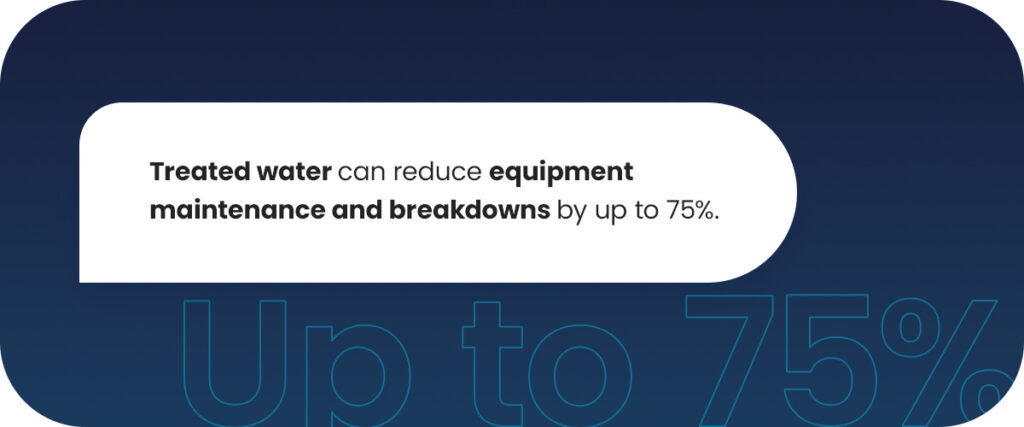
Industry data suggests that water filtration can reduce equipment maintenance and breakdown issues significantly. According to the Foodservice Consultants Society International, treated water can reduce equipment maintenance and breakdown by up to 75%.
Water treatment can also help restaurants control operating costs. Treated water helps reduce scale buildup, which can lower the risk of equipment strain, service interruptions and premature wear. It also helps dishwashers and cleaning products perform more effectively, reducing the extra labor that comes with hand-polishing glassware or troubleshooting recurring quality issues. For a busy kitchen, those savings add up through fewer service calls, consistent equipment performance, and better beverage and ice quality.
What to Look for in a Commercial Water Filtration System
Choosing the right system starts with understanding what your operation actually needs. Every restaurant uses water differently, and a system that works well for a coffee shop won’t necessarily fit a full-service kitchen with high-volume dishwashing and steam cooking. Here are the key factors to evaluate:
- Scalability: As your operation grows, your water treatment system should be able to grow with you. Look for systems that allow modular expansion rather than requiring full replacement when demand increases. This flexibility protects your initial investment and gives you room to adapt as your needs change.
- System operation type: The type of operation the system uses affects both cost and reliability. Nonelectric, demand-based systems regenerate based on actual water use rather than preset timers. This approach reduces waste in salt, water and energy compared to traditional electric systems that regenerate on a schedule regardless of whether regeneration is actually needed.
- Space and footprint: Space is always at a premium in commercial kitchens. Systems vary widely in size and footprint, so knowing what fits in your mechanical room or storage area before you start shopping saves time and frustration. Compact systems designed for tight spaces can deliver the same performance as larger units when properly sized to your demand.
- Service responsiveness: Responsive service is just as important as the equipment itself. When a system needs attention, downtime compounds the same equipment and quality problems the system was installed to prevent. Look for providers who respond quickly and have the expertise to diagnose and resolve issues without unnecessary delays.
- Proper sizing and water analysis: Proper system sizing requires knowing your peak daily water demand, incoming hardness levels and the specific requirements of your equipment. A water analysis before installation is the only reliable way to match a system to your operation’s actual needs rather than relying on guesswork. The right partner starts with understanding your water, not just selling you a system.
Get Commercial Water Treatment and Filtration Solutions From CGC Home Services
At CGC Home Services, we’ve been helping people protect their operations for over 80 years as an authorized, independent Kinetico® dealer. We understand that every restaurant has different needs, so we offer commercial water treatment and filtration solutions designed to fit your space and demand. Whether you need the Hydrus® industrial water softener for high-volume operations, the scalable Kinetico® CP Series or a compact Kinetico® CC Series model for lower-volume applications, we’ll help you find the right fit.
Our nonelectric, demand-based systems are built to be efficient and reliable, using significantly less salt and water than traditional systems. Every installation begins with a free water analysis so we can tailor the solution to your operation. We respond promptly during business hours and answer calls 24/7 with AI-assisted after-hours support. Call us at 800-633-7114 or schedule your free water quality assessment to learn more about why Kinetico® systems deliver the reliability your kitchen needs.